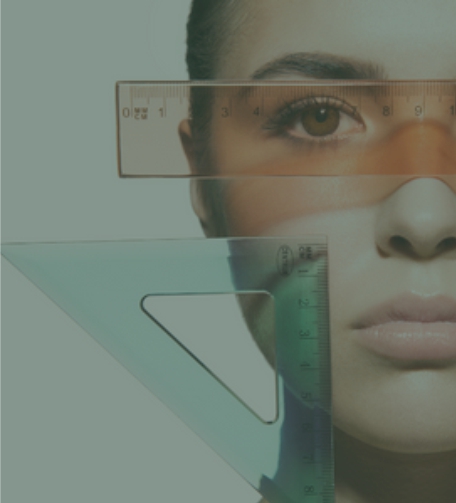
Nowadays, when we talk about beautiful skin, we associate it with healthy skin: an absence of wrinkles, spots, imperfections and redness.
Self-image has become an obsession specific to our generation, motivated by magazines but also by the advent of social networks like Instagram. These media give us the illusion of smooth and glowing skin. But what if we put the filters aside and tried to figure out together how to achieve natural beautiful skin?
We regularly hear that perfect skin is like the Holy Grail, a goal to achieve, but we don't know its exact definition.
The answers are not lacking and each person has their own definition. The judging criteria are very personal and can be influenced by age, origins, culture… even beauty trends.
In our Western culture, the perfect skin would be skin with a homogeneous texture, with a grain endowed with a regular micro-relief like a baby's skin, therefore without visible pores . Skin that has no stains or small visible blood vessels, with a luminous and even complexion.
Did you know that skin quality plays a crucial role in perceived age? Those who display “zero defect” skin can be perceived 5 years younger… and up to 10 years for those whose skin captures the light!
However, elements hinder this quest for perfect skin: external aggressions (pollution, sun exposure, tobacco, etc.), a poor lifestyle or even a lack of mastery of dermo-cosmetic gestures are responsible for poor skin quality.
To keep or regain beautiful skin, it is essential to properly cleanse your skin without attacking it, ridding it of impurities and soothing it. The challenge of tomorrow is to protect your skin from pollution, to offer it quality cosmetics, medical-aesthetic care while focusing on the oral route in order to promote synergies to obtain an optimal and visible result on the skin. Find the interview of a dermatologist doctor to discover his advice.